Confirm the spring type
Most doors use a torsion spring on a shaft above the door, or extension springs along the tracks. The contractor identifies the setup before quoting any repair.
Serving Broken Arrow, Oklahoma & surrounding areas
Calls answered around the clock
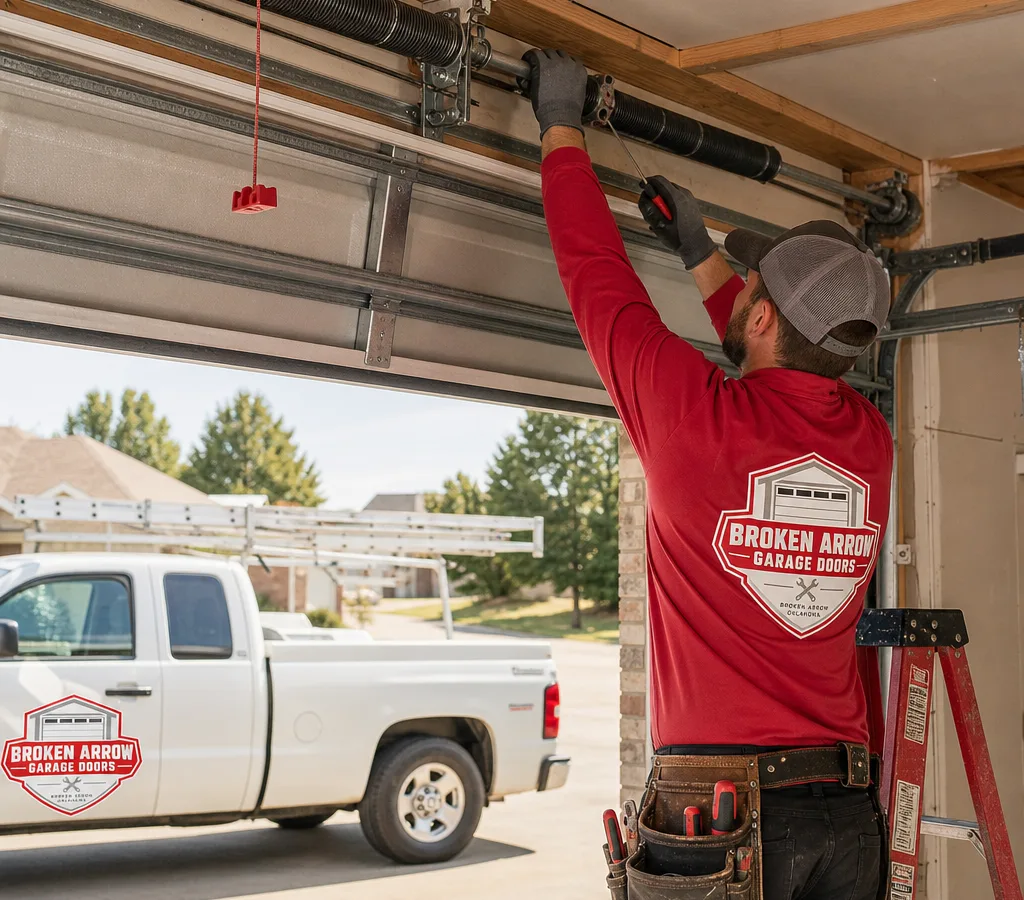
Garage door spring service in Broken Arrow, Oklahoma
Describe what the door is doing once and we'll connect you with a local contractor who handles spring repairs and replacements.
CALL NOW: (539) 265-6393Spring repair orientation
If you're searching for garage door spring repair Broken Arrow, the usual story is the same: the door feels heavy, won't open, slams shut, or the opener strains and stops. The spring system is what counterbalances the door's weight. When a spring fails, the opener is no longer lifting a balanced load, and forcing it can burn out the motor, bend the rail, or pull hardware loose.
Common signs of a broken garage door spring:
Spring work is high-tension work. A local contractor will use the right winding bars, locking pliers, and procedures to control the stored energy in the system. A sticking or noisy door may also involve rollers, hinges, cables, or opener limits.
In Broken Arrow, many doors cycle hard through temperature swings and wind-driven dust, which can dry out bearings and add drag. Extra drag makes springs and openers work harder, so a good spring appointment starts with checking the whole lift system, not only swapping a coil.
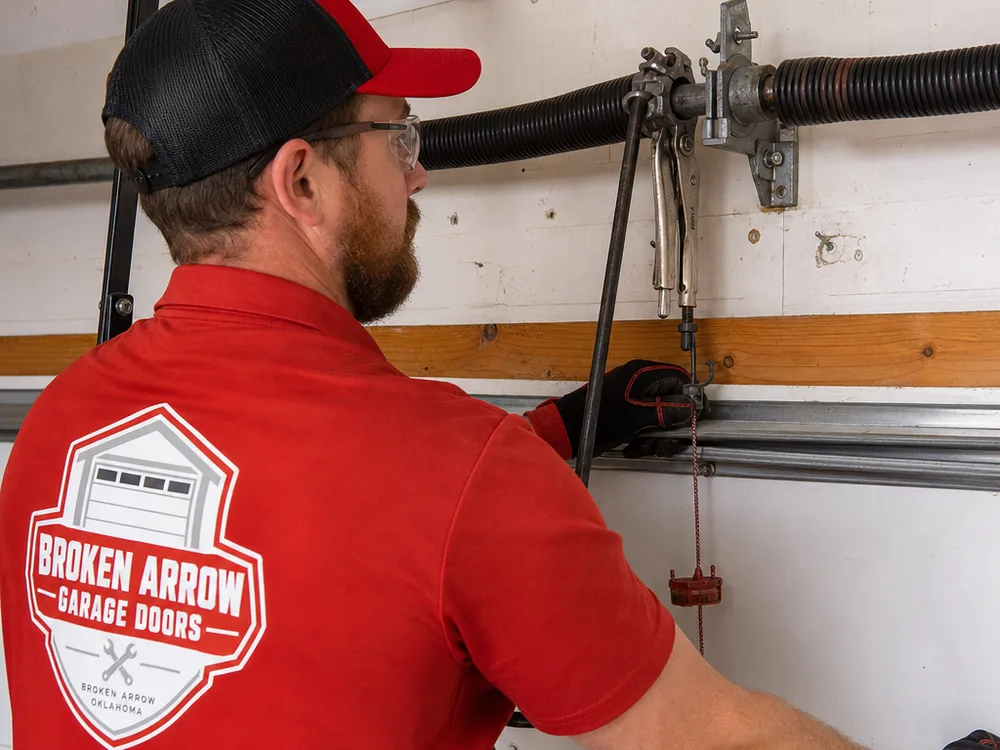
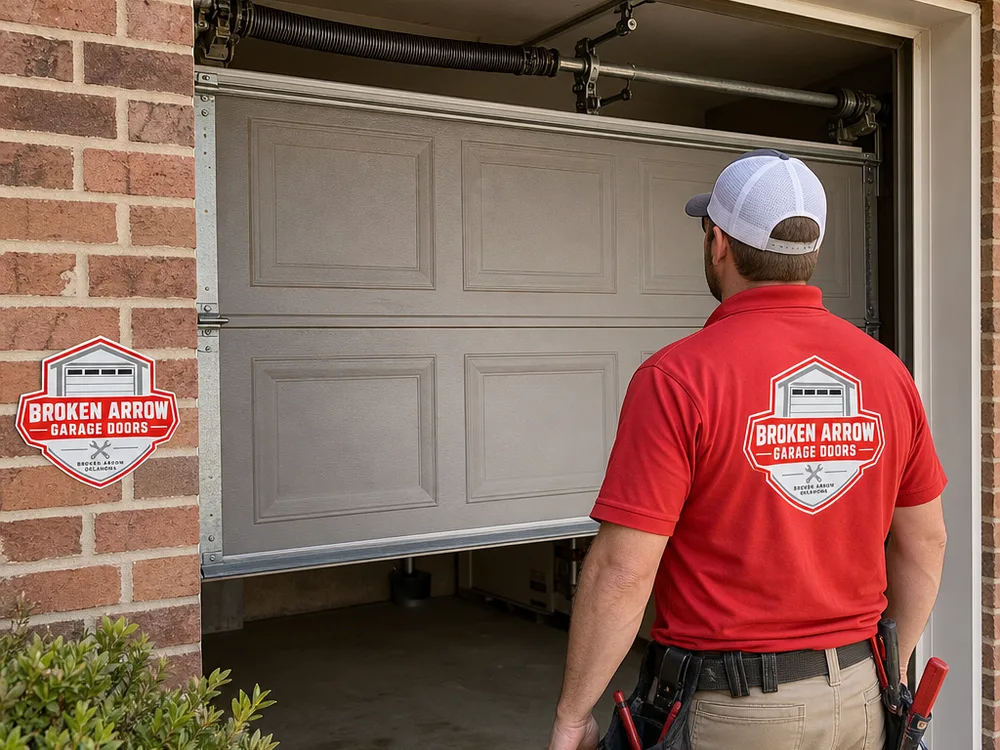
Most doors use a torsion spring on a shaft above the door, or extension springs along the tracks. The contractor identifies the setup before quoting any repair.
A spring failure can leave cables slack or jumped off the drum. A careful reset prevents the door from lifting unevenly after the spring is replaced.
Correct sizing is based on door weight and drum geometry. The goal is a balanced door that can be lifted manually with steady effort.
After broken spring repair, the opener may need limits and force adjusted so it stops and reverses properly at the floor and header.
Rollers, hinges, track condition, and top fixtures affect how much work the spring must do. Reducing drag helps the new spring cycle normally.
From call to operational check
Tell us what the door is doing—won't open, loud bang, hanging crooked, or opener hums. We connect you with a local contractor who handles spring repair and replacement.
The contractor verifies whether it's torsion or extension, notes the door size and construction, and checks cables, drums, and bottom brackets.
Torsion springs are unwound with winding bars; extension systems are secured so stored tension cannot snap components or pull the door unexpectedly.
Correct torsion springs are mounted and wound for the door. Extension work may include replacing springs and safety cables and leveling both sides.
The door is tested by hand for balance, then with the opener for smooth travel, proper closing, and safe reverse behavior.
If the door is stuck closed or feels unusually heavy, describe what you're seeing once and get connected with a local contractor who can handle the spring work safely.
CALL NOW: (539) 265-6393Spring work view
Practical spring answers
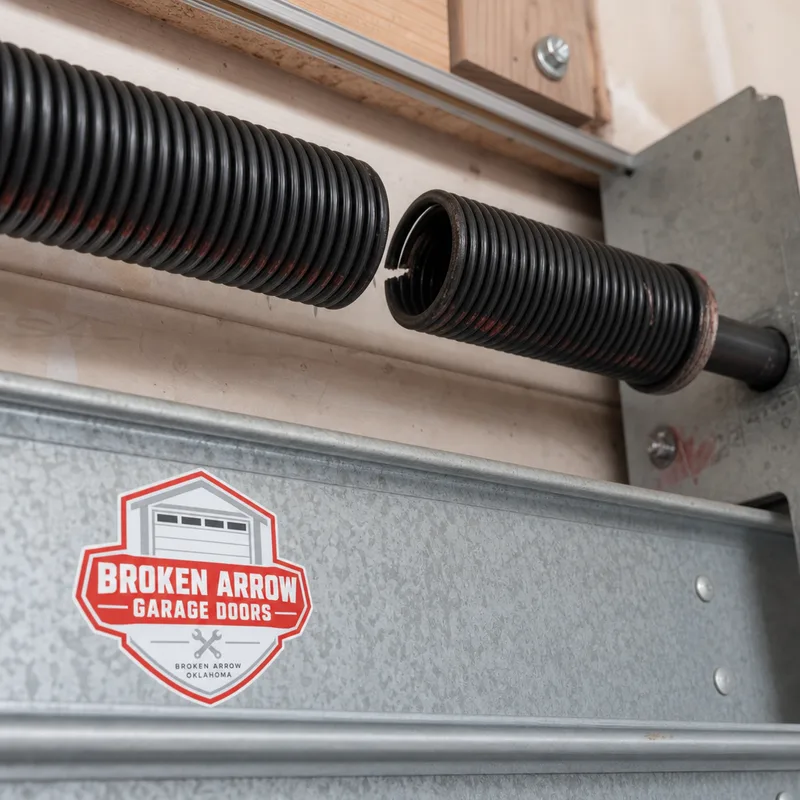
A broken spring usually shows up as a door that suddenly feels very heavy and won't lift normally, even if the opener runs. If you pull the red release cord and the door is extremely hard to raise by hand, the counterbalance is likely gone. An opener issue is more likely when the door moves smoothly by hand but the motor won't run, the remote won't trigger, or the trolley won't engage.
Lifting a door with a broken spring is risky because the full weight of the door is no longer counterbalanced. If you must move it, get help, keep hands clear of pinch points, and avoid standing under the door. Many homeowners choose to leave the door closed and wait for the contractor to address the spring and cable condition.
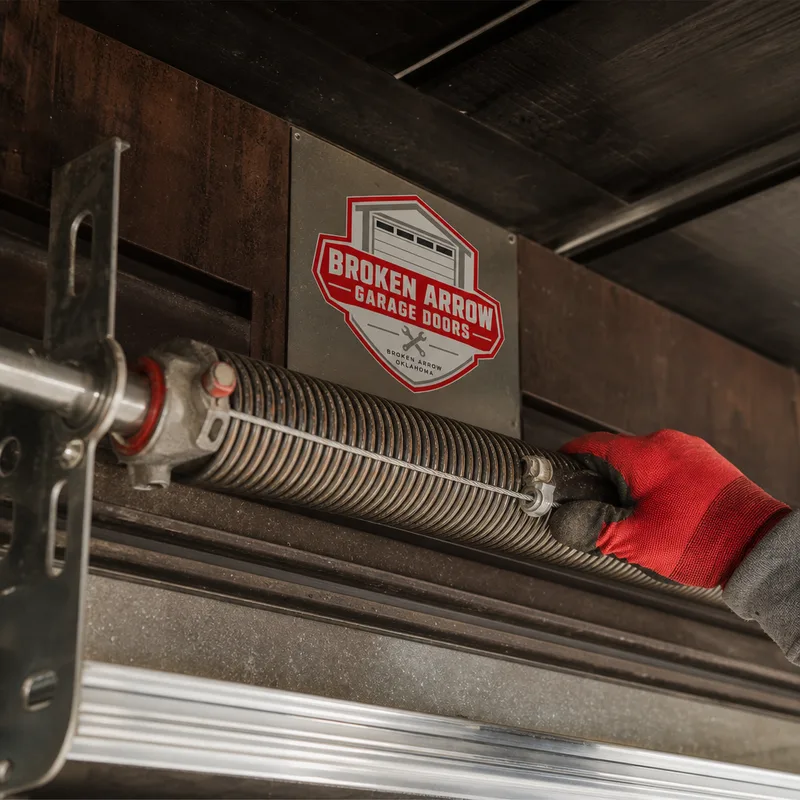
Torsion springs sit on a shaft above the door and are wound with controlled turns to balance the door. Extension springs run along the tracks and stretch as the door closes; they typically use pulleys and safety cables. The hardware, adjustment method, and failure modes differ, so the contractor will identify the system before choosing parts and setting tension.
On two-spring torsion systems, the second spring has usually cycled the same amount and may be near the same wear point. Contractors often recommend replacing both so the door stays evenly balanced left-to-right and the springs have similar performance. The contractor you speak with can explain the condition they see and the options.
Start with what the door is doing—won't open, slams, hangs crooked, or made a loud bang—whether the door is stuck open or closed, and whether you see a spring gap above the door or a hanging cable near the track. If you know the door type and whether it uses torsion or extension springs, mention that too.
Spring replacement is typically a single-visit repair, with the bulk of the time going to safe unloading, correct spring sizing, balancing, and testing. If cables are off the drums, bottom brackets are damaged, or bearings and rollers are binding, additional corrective work may be needed to get smooth, even travel.
Garage door springs store enough energy to cause serious injury if the wrong tools or steps are used. A contractor has winding bars and procedures to secure the shaft, control the door, and set tension accurately. A phone call can connect you with someone who performs this work routinely and can talk through your setup.
Broken Arrow spring repair connection
Broken Arrow Garage Doors takes your call, notes what the door is doing, and connects you with a local contractor who handles garage door spring repair. You discuss the fix directly with the contractor and decide how to proceed.